Time is a fundamental aspect of our lives, and various systems of measurement have been developed to quantify and express it accurately. Two widely used systems for measuring time are the English system and the Metric system. In this article, we will explore the intricacies of time measurements in both systems and discuss their similarities and differences.
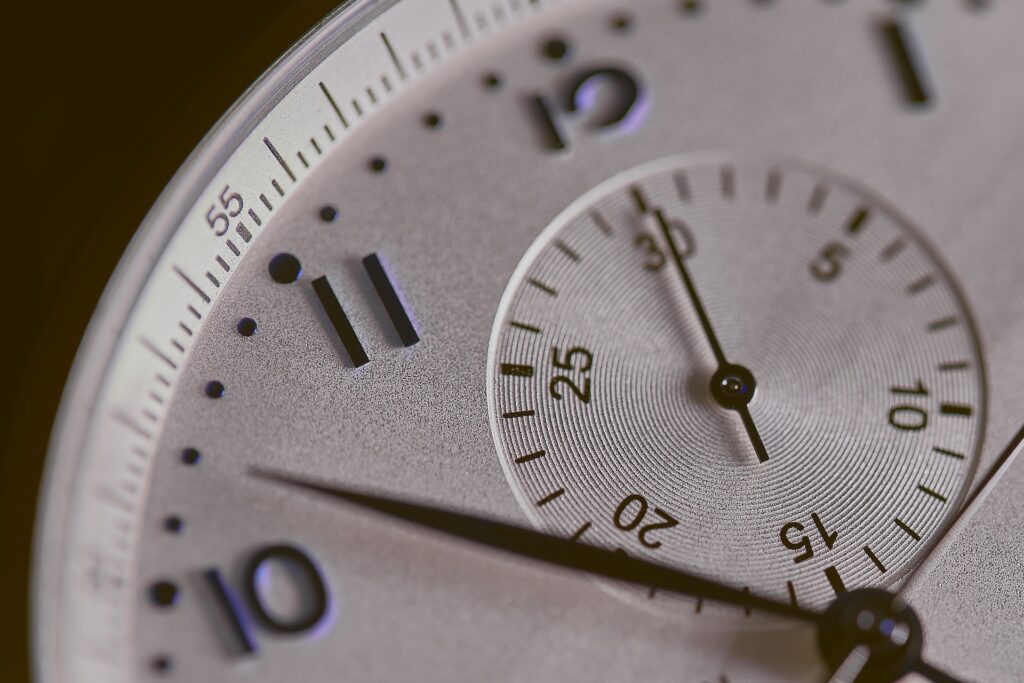
The English system primarily uses hours, minutes, and seconds as units of time measurement. There are 60 seconds in a minute, 60 minutes in an hour, and 24 hours in a day. The English system further subdivides time into smaller units such as milliseconds, microseconds, and nanoseconds for precise measurements. For example, there are 1,000 milliseconds in a second, 1,000 microseconds in a millisecond, and 1,000 nanoseconds in a microsecond.
In contrast, the Metric system uses the International System of Units (SI) for time measurement. The base unit of time in the Metric system is the second (s). The second is defined as the duration of 9,192,631,770 periods of the radiation corresponding to the transition between two hyperfine levels of the ground state of the cesium-133 atom. The Metric system employs prefixes such as milli-, micro-, and nano- to indicate smaller units of time. For example, there are 1,000 milliseconds in a second, 1,000 microseconds in a millisecond, and 1,000 nanoseconds in a microsecond, similar to the English system.
It is important to note that the Metric system’s use of the second as the base unit aligns with scientific standards and promotes consistency in international communication and collaboration. The second, being a universally recognized unit, ensures accurate and standardized time measurements across various scientific fields and applications.
Both the English and Metric systems use similar subunits for smaller time measurements, such as milliseconds, microseconds, and nanoseconds. This uniformity allows for easy conversion between these units in both systems. For instance, converting from milliseconds to seconds in either system simply requires dividing the value by 1,000.
However, there are notable differences in the conventions and usage of time measurements in the English and Metric systems. One such difference is the way time is expressed and written. In the English system, time is typically expressed using the 12-hour clock, with an “a.m.” or “p.m.” suffix indicating whether the time is before or after noon, respectively. For example, 10:30 a.m. denotes half-past ten in the morning, while 6:45 p.m. represents quarter to seven in the evening.
In contrast, the Metric system primarily uses the 24-hour clock, also known as the military time format. The 24-hour clock eliminates the need for the “a.m.” and “p.m.” suffixes by using a continuous count from 00:00 (midnight) to 23:59 (one minute before midnight). For example, 10:30 in the morning is represented as 10:30, while 6:45 in the evening is written as 18:45. The 24-hour clock format is more commonly used in scientific and international contexts, as it avoids confusion and ambiguity.
Another notable difference is the way time is written in terms of subdivisions. In the English system, time is often expressed as hours, minutes, and seconds, such as 2 hours, 30 minutes, and 45 seconds. In contrast, the Metric system typically uses the decimal format, expressing time as a single value. For example, 2.5 hours represents 2 hours and 30 minutes, while 0.75 hours represents 45 minutes. The decimal format allows for easier calculations and conversions between units.
In recent years, there has been a growing trend towards adopting the 24-hour clock format and decimal time representation in various fields. This shift is driven by the need for international standardization, efficient communication, and global cooperation. The 24-hour clock format and decimal time representation offer clarity, precision, and ease of use in different cultural and linguistic contexts.
Time measurements in the English and Metric systems differ primarily in the units of measurement, conventions, and representations used. The English system primarily uses hours, minutes, and seconds, while the Metric system employs the second as the base unit of time. Both systems utilize subunits such as milliseconds, microseconds, and nanoseconds for smaller time measurements. Understanding the similarities and differences between these systems is essential for accurate time measurements and effective communication in various contexts.