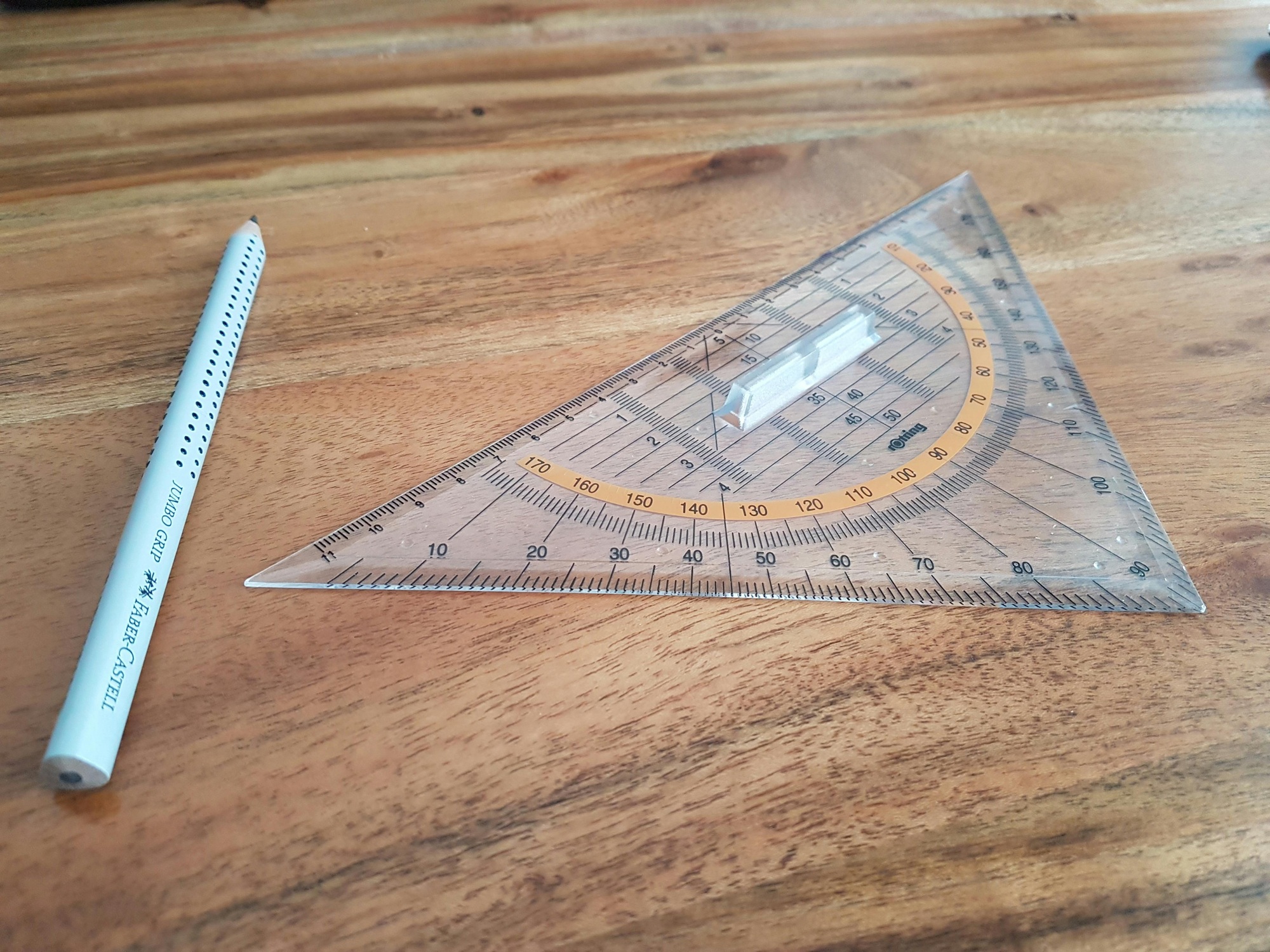
Measurement is the foundation of science. From calculating the distance between stars to measuring the ingredients in a recipe, accurate and consistent measurement systems allow us to describe, compare, and understand the world. Yet, depending on where you live, you may be more familiar with either the English system (also known as the Imperial system) or the Metric system. These two systems are different in structure, history, and usage—but both play important roles in everyday life and scientific practice.
In this article, we’ll explore the basics of scientific measurement, highlight the key differences between the English and Metric systems, and explain why scientists across the globe rely on one system far more than the other.
Why Measurement Matters
Before diving into the systems themselves, it’s important to understand why measurement is so central to science and society. Measurement gives us a way to:
- Standardize information – Without standardized units, communication would be chaotic. Imagine trying to bake bread if one recipe called for “a handful” of flour and another used “a scoop.” Standard measurement ensures clarity.
- Enable trade and commerce – Accurate measurement of goods, such as weight and volume, is crucial in fair trade and global markets.
- Advance science and technology – From physics to medicine, precise measurements help scientists test hypotheses, design experiments, and replicate results.
- Ensure safety – In fields like engineering or healthcare, even small errors in measurement can lead to disastrous consequences.
Measurement is not just about numbers; it’s about accuracy, fairness, and communication. That’s why different systems of measurement developed and why one eventually became the global scientific standard.
The English System: Tradition and Familiarity
The English system (sometimes referred to as the Imperial system, though they have slight differences) is still commonly used in the United States and a few other regions. This system is rooted in centuries-old practices, shaped by the daily lives of people in medieval England.
Key features include:
- Length: inches, feet, yards, miles
- Weight: ounces, pounds, tons
- Volume: teaspoons, cups, pints, quarts, gallons
One of the defining characteristics of the English system is its irregularity. Units do not scale in neat multiples. For example:
- 12 inches = 1 foot
- 3 feet = 1 yard
- 16 ounces = 1 pound
- 2 cups = 1 pint, 2 pints = 1 quart, 4 quarts = 1 gallon
While this system may seem confusing to outsiders, many Americans find it intuitive because they grew up with it. For example, the average person in the U.S. may know instinctively how tall “6 feet” is or what “a gallon of milk” looks like, without needing to convert.
However, for scientists and international communication, the English system presents challenges because of its lack of consistency and global acceptance.
The Metric System: Simplicity and Universality
The Metric system, also known as the International System of Units (SI), was developed in France during the late 18th century. It was designed to be logical, standardized, and universal, making it easier for scientists, traders, and educators worldwide to communicate measurements.
Key features include:
- Length: millimeters, centimeters, meters, kilometers
- Mass: grams, kilograms
- Volume: milliliters, liters
- Temperature: degrees Celsius (and Kelvin for scientific work)
The metric system is decimal-based, meaning it scales in multiples of ten. This makes conversions simple:
- 1000 millimeters = 1 meter
- 1000 meters = 1 kilometer
- 1000 grams = 1 kilogram
For example, converting 3.5 kilometers to meters is as simple as multiplying by 1000 (3.5 × 1000 = 3500 meters). Compare that to converting miles to feet (1 mile = 5280 feet), which requires memorization of irregular conversion factors.
The system’s simplicity and scalability are the main reasons why the metric system has been adopted worldwide, particularly in scientific measurement.
English vs. Metric: Everyday Examples
The differences between these systems become clear when we look at real-world applications:
- Cooking:
- A U.S. recipe might call for “2 cups of flour,” while a European recipe uses “250 grams of flour.”
- Cups can vary in interpretation, but grams provide precision.
- Travel:
- Speed limits in the U.S. are given in miles per hour (mph). In most other countries, they’re in kilometers per hour (km/h).
- 60 mph ≈ 97 km/h.
- Weather:
- Americans measure temperature in Fahrenheit, while most of the world uses Celsius.
- 32°F = 0°C (freezing point of water).
- Height:
- Someone might say they are 5 feet 10 inches tall in the U.S., but in Europe, they’d be described as about 178 centimeters tall.
These examples highlight how deeply ingrained measurement systems are in culture and daily life.
Why Scientists Prefer the Metric System
When it comes to scientific measurement, consistency and universality are critical. Here’s why the metric system is favored:
- Standardization across the globe – Science is international. Using a single measurement system ensures clear communication.
- Ease of calculation – Decimal-based scaling reduces errors and simplifies complex calculations.
- Integration with other scientific units – The metric system is part of SI units, which also include seconds (time), amperes (electric current), and kelvins (temperature).
- Clarity in experiments – Scientific research must be replicable. Using metric units ensures that results can be duplicated anywhere in the world.
For instance, if a chemist in France measures a reaction at 25°C, another chemist in Japan can replicate it without conversion. If Fahrenheit were used, confusion or mistakes might occur.
The Struggle with Conversions
Even though scientists use metric, many people in the U.S. often need to convert between English and metric systems. Here are some common conversion factors:
- Length: 1 inch = 2.54 centimeters
- Mass: 1 pound = 0.454 kilograms
- Volume: 1 gallon = 3.785 liters
- Temperature: °C = (°F − 32) × 5/9
Example: A runner trains in Europe and logs 10 kilometers per day. In the U.S., that’s about 6.2 miles. Without knowing the conversion, it would be difficult to compare training routines.
Historical Context: Why Two Systems?
The coexistence of English and Metric systems is rooted in history.
- The English system evolved from Roman, Anglo-Saxon, and medieval units used in trade and daily life.
- The Metric system was a product of the Enlightenment, designed for simplicity and universality, and introduced in France in 1795.
Over time, the metric system spread globally as countries sought consistency in trade and science. However, the U.S. retained its traditional English system because of cultural attachment and the high costs of switching.
Scientific Accuracy and Global Collaboration
Science thrives on collaboration and precision. Consider these scenarios:
- Medicine: A doctor prescribing 5 milligrams of medication in Europe should mean the same thing as 5 milligrams in the U.S. Confusion in units could endanger lives.
- Engineering: International teams designing airplanes or spacecraft must use the same units to avoid disaster. (NASA’s Mars Climate Orbiter was famously lost in 1999 due to a conversion error between English and Metric units.)
- Climate science: Global temperature data is reported in Celsius, allowing scientists worldwide to track and compare climate change consistently.
Without the metric system as a shared standard, science would struggle to maintain accuracy and clarity.
Will the U.S. Ever Switch to Metric?
This question often arises, especially in discussions about science education. While the U.S. officially recognizes the metric system, everyday life is still dominated by English units.
Barriers to change include:
- Cost of converting road signs, packaging, and tools.
- Public resistance due to cultural familiarity with English units.
- Lack of urgency, since Americans are accustomed to using conversions when necessary.
However, certain industries in the U.S., such as medicine, military, and science, already rely almost exclusively on metric. This may pave the way for gradual adoption over time.
Tips for Mastering Both Systems
For students, travelers, or professionals, being comfortable with both systems is highly beneficial. Here are some tips:
- Learn key reference points – Know that 1 inch = 2.54 cm or that 1 liter ≈ 1 quart.
- Use mental shortcuts – For example, doubling Celsius and adding 30 gives a quick Fahrenheit estimate.
- Practice with everyday items – Convert your height, your water bottle size, or your car’s fuel consumption.
- Use digital tools – Conversion apps or calculators make the process easier.
With practice, switching between systems becomes second nature.
The English and Metric systems reflect two different approaches to measurement: one rooted in tradition, the other in universality and simplicity. While the English system remains embedded in American culture, the Metric system has become the global standard for science, trade, and communication.
For scientists, students, and professionals, understanding both systems is essential. It not only bridges cultural differences but also ensures accuracy and clarity in global collaboration. Measurement may seem like a small detail, but it’s the backbone of knowledge, progress, and safety.
By mastering the basics of scientific measurement—and understanding the distinctions between English and Metric systems—we gain the tools to better navigate both everyday life and the world of science.
The written content on this page was generated by perplexity.ai.